Oliwa Cistercian Abbey - A Witness to Centuries and History
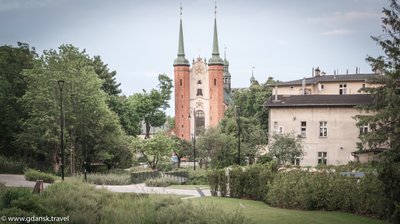
Founded in 1186 by Duke Sambor I of Gdańsk, the Oliwa Cistercian Abbey is one of the most important heritage sites in Pomerania. It was established as a filial of the Cistercian monastery in Kołbacz, and its history dates back to Romanesque beginnings, when in the 13th century the presbytery of the basilica and the eastern wing of the monastery with a dormitory were built. Later Gothic extensions gave the church its present shape, enriching it with elements such as the 15th-century Chapel of the Holy Cross and the Gatehouse. In modern times, the monastery experienced many destructions, for example in 1577, which required reconstruction and modernization. New roof trusses were introduced, vaults were rebuilt, and the economic facilities were expanded. In the 17th century, the church was enriched with the chapels of the Five Wounds and the Marian Chapel, and the surrounding garden was transformed in the Baroque style. A significant event was the signing of the peace treaty known as the Peace of Oliva in 1660, ending the Polish-Swedish war. At the end of the 18th century, during the time of Abbot Jacek Rybiński, the abbey experienced a period of prosperity. New buildings were created, such as the New Abbey Palace and the Abbey Stable, and the abbey garden was redesigned by the gardener Johann G. Saltzmann. Unfortunately, in 1772 the abbey was taken over by Prussia, and its property was confiscated. In 1831, the monastery was finally suppressed, and the parish church was raised to the rank of cathedral in the newly established diocese of Gdańsk in 1925. Today, the former monastery in Oliwa remains a valuable historical monument, combining Romanesque simplicity, Gothic monumentality, and modern elegance.