Lipce Manor – ancestral residence of the Ferbers
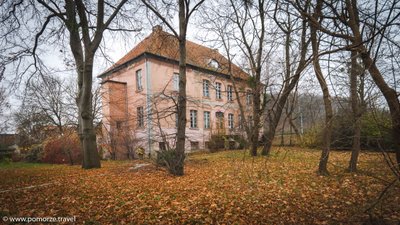
The Ferber Manor in Lipce, now a district of Gdańsk, is a unique historical monument with a rich history dating back to the mid-16th century. In 1550, the estate was acquired by the Gdańsk burgomaster Konstanty Ferber, who purchased the office of the village headman along with the associated manor and lands. From that moment on, the estate became the ancestral property of the influential Ferber family, whose members shaped the history of Gdańsk for centuries.
The manor was built on a rectangular plan on one side of the Radunia river, surrounded by a park and garden, while on the other side, there was an inn, a brewery, and fish ponds. In the 17th century, the building was so grand that in 1677, King Jan III Sobieski and Queen Marysieńka stayed there during their journey to Gdańsk.
Over the centuries, the manor was rebuilt many times. At the beginning of the 18th century, Nathanael Gottfried Ferber gave it a new look, restoring its splendor after the destruction caused by the Cossack invasion in 1734. Further modernizations took place after the Napoleonic Wars (1807-1813), when Lipce was repeatedly plundered, and a flood caused by the breaking of the Radunia dam destroyed part of the manor complex.
In 1813, after the death of the last Ferber, the estate passed to the heirs and was rebuilt in the Classical style. The manor belonged successively to the von Wagenfeld and Misch families, and between 1822 and 1892 it was owned by Gdańsk deaconesses who ran a hospital there.
In the interwar period, there was a horticultural school for girls (1918-1933) and a sanatorium (1933-1945). At that time, a veranda, a dining room, and modern installations were added.
To this day, elements remain that testify to the rich history of the building, including 19th-century stuccowork and a historic hall. The park surrounding the manor, now known as the Ferber Park, recalls the former glory of this place, which for centuries has witnessed the turbulent history of the region.