Granary Island in Gdańsk
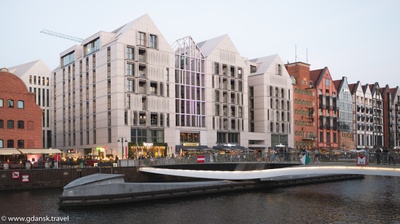
The Granaries Island was established in 1576 after the digging and widening of the former moat of Gdańsk, as well as a change in the course of the main flow of the Motława River. This part of the city was typically industrial and closely connected to the Long Embankment. The island housed numerous granaries, with their number reaching around 340 in the 16th century. These tall, spacious, and multi-story warehouses were constructed of wood, brick, clay, and stone. The granaries located along the river had long bridges facilitating the loading and unloading of goods directly onto and from ships. Instead of numbers, the buildings had their own names. It's worth asking why the industrial district was surrounded by canals. The answer is surprising: this was how the people of Gdańsk protected their property from theft, which was strictly punished. A nighttime ban was imposed on the island, and additional protection came from packs of dogs released at night. Since 1885, a railway began to reach the island, and simultaneously a network of tracks developed leading from the station near the Low Gate. Due to the fire hazard, the wagons were pulled by horses onto the island. An interesting fact is the remnants of turntables on roads that facilitated turning the wagons into transverse streets. In 1945, the island was almost completely destroyed by the Red Army, which entered the city. To this day, only a few buildings along the Motława have been rebuilt.