St. Nicholas Church in Gdańsk: History, Architecture, and Spiritual Tradition
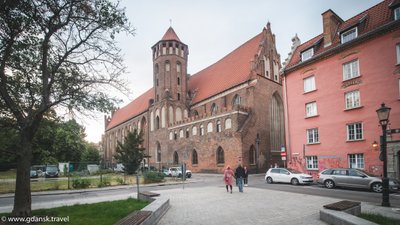
The Dominican St. Nicholas Church in Gdańsk is one of the city's oldest and most significant religious monuments, with origins tracing back to the 12th century. The first Romanesque church was likely built in 1185 at the intersection of two major trade routes, emphasizing the connection of St. Nicholas, the church's patron, with sailors and merchants. In 1227, Duke Świętopełk granted the church to the Dominicans, brought by St. Jacek Odrowąż, who soon established a monastery adjacent to the church. Pope Alexander IV granted them an indulgence in 1260, initiating the tradition of the Dominican Fair. The present Gothic structure was built in the late 14th to early 15th century. The church was gradually expanded, with valuable interior elements such as the main altar, stalls, pulpit, and organ added over time. It endured multiple lootings during religious conflicts in the 16th century but remained a bastion of Catholicism in Protestant Gdańsk. In 1587, the election document was presented to King Sigismund III in the church, underlining its historical significance for Poland. In the late 17th century, the Gothic chapel of St. Jacek was remodeled, although the Dominican monastery was destroyed in 1813 during the siege of Gdańsk. The Dominicans left the city in the 19th century, and the monastery buildings were demolished. Nonetheless, St. Nicholas Church survived World War II without major damage—a feat attributed by legend to the veneration of its patron, honored in both Catholicism and Orthodoxy. In 1929, Pope Pius XI granted it the title of Minor Basilica, and after the war, the Dominicans returned to Gdańsk, bringing the miraculous image of Our Lady of Victory from Lviv, which remains in the church today.